
The problem
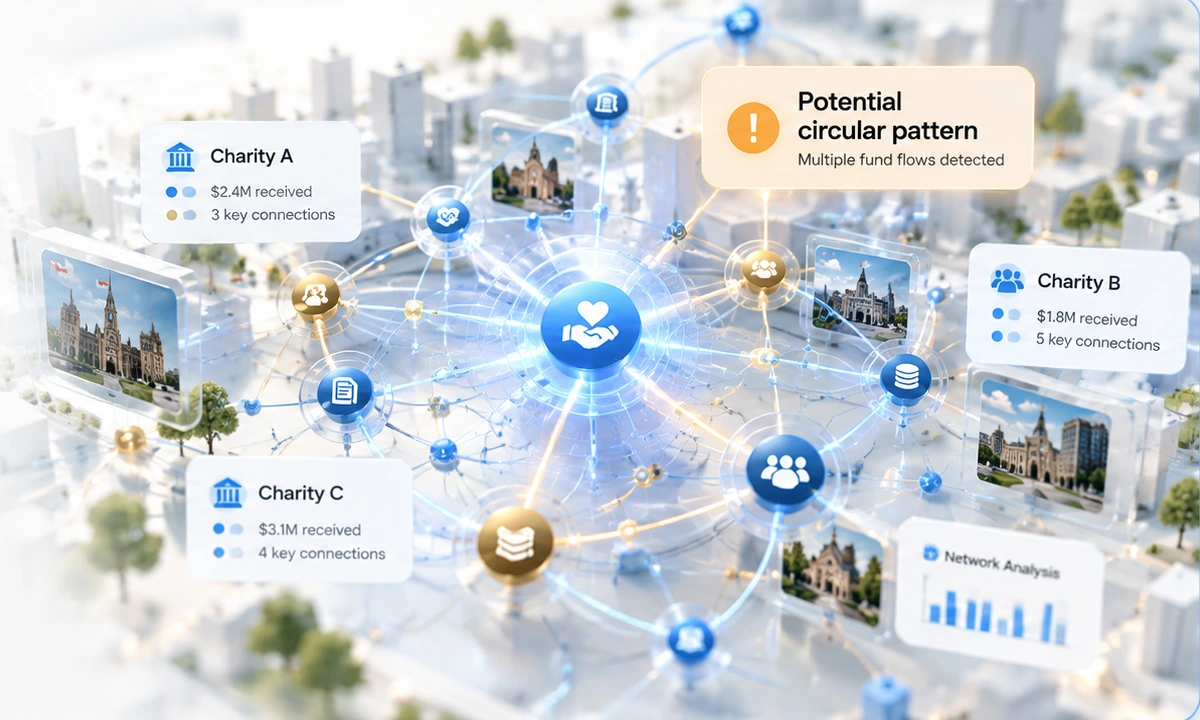
Financial relationships can be difficult to understand when transfers are examined one row at a time. A network view helps reveal paths, repeated relationships and potential loops that deserve closer inspection, especially when the underlying dataset contains many interconnected organizations.
Graph-first exploration
LoopLens focuses on Canadian charity-transfer data. It presents connected entities and transfer relationships as an explorable network so an analyst can trace paths and examine possible circular patterns. The goal is to support further investigation, not to label organizations based on a visualization alone.
Grounded AI assistance
The prototype combines network exploration with evidence-grounded memos and claim verification. A generated explanation should be traceable to relevant data rather than introducing unsupported conclusions. This reflects the same reliability concern that motivates my broader LLM evaluation work.
Engineering approach
The project brings together Python, FastAPI, Next.js and graph analysis techniques. A graphical interface makes the relationships accessible, while the AI-assisted layer helps translate selected evidence into readable summaries.
Limits and responsible interpretation
A circular path in transfer records does not, by itself, establish misconduct, intent, or a legal violation. Data quality, reporting conventions and contextual information all matter. Findings must be treated as exploratory signals requiring independent verification.